Milyen egy jó SEO ügynökség? Az útmutató a digitális sikerhez
Az online tér egy nyüzsgő, végtelen metropolisz, ahol naponta vállalkozások ezrei versengenek a felhasználók figyelméért. Ebben a digitális forgatagban láthatónak lenni nem csupán előny, hanem a túlélés záloga. A keresőoptimalizálás (SEO) az a térkép és iránytű, amely elvezeti a potenciális ügyfeleket az Ön virtuális ajtajáig. De mi történik, ha a térkép olvasásához szakértő idegenvezetőre van szükség? Itt lép a képbe egy jó SEO ügynökség.
A megfelelő partner kiválasztása azonban legalább annyi körültekintést igényel, mint egy komoly üzleti befektetés. Egy rossz döntés nem csupán pénzkidobás, de akár árthat is weboldala hírnevének a Google szemében. Ebben a cikkben lerántjuk a leplet a titkokról, és egyenes, gyakorlatias válaszokat adunk arra a kérdésre, hogy milyen egy jó SEO ügynökség. Olyan tudást adunk a kezébe, amellyel magabiztosan navigálhat az ajánlatok között, és megtalálhatja azt a partnert – például egy olyan elhivatott csapatot, mint a Digitális Vár –, amely valóban a vállalkozása sikerét tartja szem előtt.
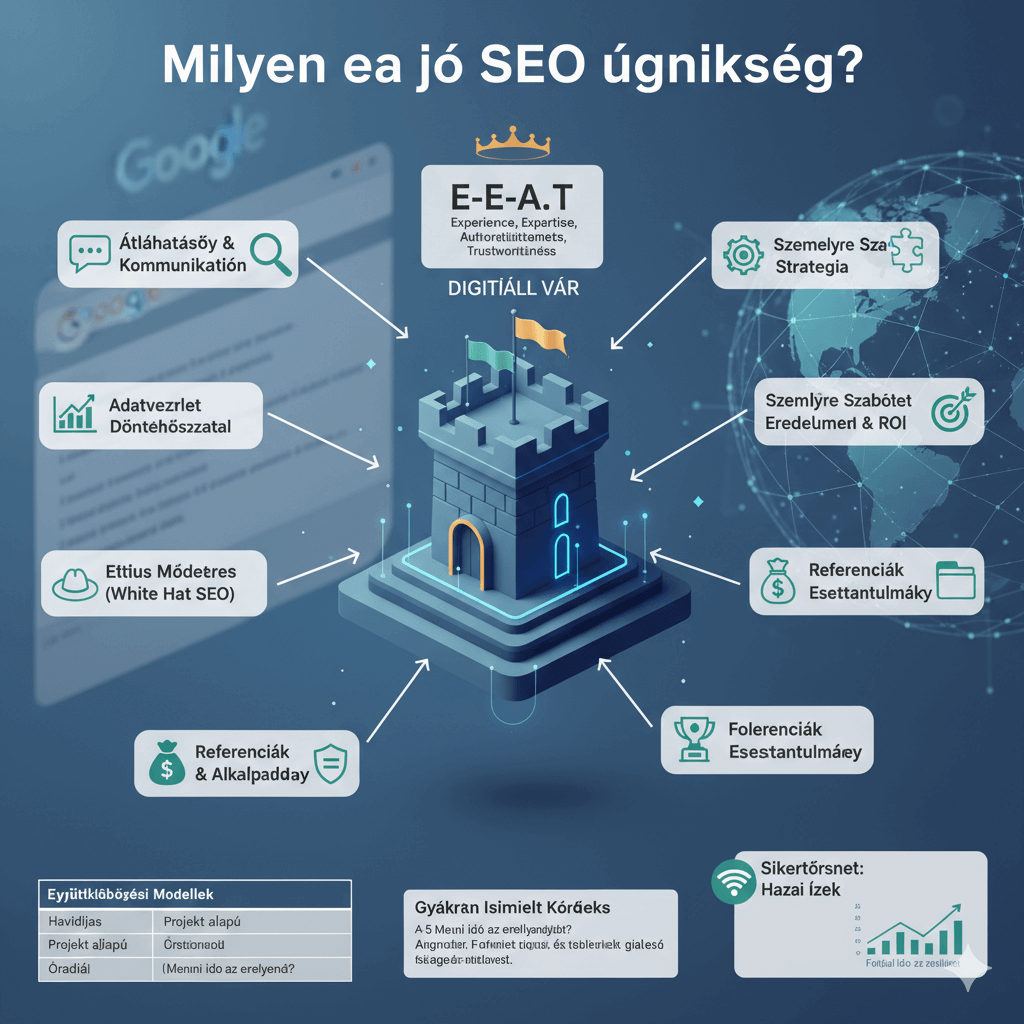
A SEO nem mágia, hanem stratégia: Miért elengedhetetlen egy profi ügynökség?
Sokan még mindig egyfajta misztikus, sötét művészetként tekintenek a SEO-ra, pedig a valóság ennél sokkal prózaibb és egyben összetettebb. A keresőoptimalizálás egy adatvezérelt, folyamatosan változó diszciplína, amely technikai tudást, kreatív tartalomgyártást és stratégiai gondolkodást igényel. A Google algoritmusa évente több százszor frissül, így ami tegnap működött, az holnap már elavult lehet.
Egy professzionális ügynökség naprakész tudással rendelkezik ezekről a változásokról. Nem csupán kulcsszavakat szór el a szövegben, hanem egy komplex, mindenre kiterjedő stratégiát épít fel, amelynek pillérei a technikai SEO, a tartalommarketing és a linképítés. Egy olyan ügynökség, mint a Digitális Vár, pontosan érti, hogy a cél nem csupán a Google első oldalára kerülés, hanem a releváns, vásárlási szándékkal bíró közönség elérése és konverziója.
A KSH 2024-es adatai szerint a magyar internetfelhasználók 97%-a használja a Google keresőjét információgyűjtésre vásárlás előtt. Ez a döbbenetes szám rávilágít, hogy aki nincs jelen a keresőben, az gyakorlatilag nem létezik a potenciális vevői számára.
Az E-E-A-T irányelv, mint a minőség mércéje: A Google szemével
A Google nemrégiben frissítette minőségi irányelveit, és bevezette az E-E-A-T koncepciót, amely a jó tartalom és a megbízható weboldalak legfőbb ismérveit foglalja össze. Egy kiváló SEO ügynökség munkájának alapját ezek az elvek képezik. Nézzük, mit is jelentenek pontosan:
-
Experience (Tapasztalat): A tartalom készítője rendelkezik-e első kézből szerzett, gyakorlati tapasztalattal a témában? Egy jó ügynökség nem csak elméletben ismeri a SEO-t, hanem valós projekteken, esettanulmányokon keresztül bizonyítja rátermettségét.
-
Expertise (Szakértelem): A tartalom mély szakmai tudást tükröz-e? A Digitális Vár szakértői csapata folyamatosan képzi magát, hogy a legújabb trendekkel és eszközökkel dolgozhasson.
-
Authoritativeness (Tekintély): A weboldal és a szerző elismert szereplő-e az adott iparágban? Egy ügynökség tekintélyét az elégedett ügyfelek, a szakmai publikációk és a pozitív visszajelzések építik.
-
Trustworthiness (Megbízhatóság): A tartalom pontos, átlátható és hiteles forrásokon alapul-e? A megbízhatóság kulcsa az etikus módszerek alkalmazása és a transzparens kommunikáció az ügyfél felé.
Ha egy ügynökség működése és stratégiája összhangban van ezekkel az elvekkel, az már fél siker.
A jó SEO ügynökség 7 ismérve: Ellenőrzőlista a választáshoz
Hogyan válassza ki a megfelelő partnert a gyakorlatban? Az alábbi lista segít eligazodni az ajánlatok tengerében.
1. Átláthatóság és kommunikáció: Nincsenek sötét foltok
Az egyik legfontosabb intő jel, ha egy ügynökség titkolózik a módszereiről. Egy megbízható partner, mint a Digitális Vár, nyíltan kommunikál. Részletes, érthető riportokat küld, amelyekben nem csak a helyezéseket, hanem a forgalom, a konverziók és a befektetés megtérülésének (ROI) alakulását is bemutatja. A rendszeres, proaktív kommunikáció alapfeltétel.
2. Adatvezérelt döntéshozatal: A megérzések kora lejárt
A modern SEO nem a hasraütésszerű ötletekről szól. A professzionális ügynökségek iparági sztenderd eszközöket (pl. Google Analytics, Ahrefs, SEMrush) használnak a kulcsszókutatáshoz, a versenytársak elemzéséhez és a stratégia finomhangolásához. Minden döntést adatokkal és elemzésekkel támasztanak alá. A Digitális Vár csapata számára az adatok jelentik az iránytűt minden projekt során.
3. Személyre szabott stratégia: Nincs két egyforma üzlet
Óvakodjon az "egy kaptafára" készülő, dobozos SEO csomagoktól! Minden vállalkozás más, egyedi célokkal, célközönséggel és versenytársakkal. Egy jó SEO ügynökség időt szán arra, hogy mélyen megértse az Ön üzleti modelljét, és erre alapozva dolgoz ki egy személyre szabott, hosszútávú stratégiát. Ez a Digitális Vár filozófiájának alapköve.
4. Etikus módszerek (White Hat SEO): A hosszú távú siker záloga
A gyors eredményeket ígérő, "black hat" (fekete kalapos) technikák (pl. kulcsszóhalmozás, rejtett szövegek, vásárolt linkek) talmi csillogása komoly veszélyeket rejt. A Google előbb-utóbb lefüleli ezeket a trükköket, és súlyos büntetést szab ki, ami akár a keresőből való teljes kizárást is jelentheti. Egy etikus ügynökség kizárólag a Google irányelveinek megfelelő, "white hat" módszereket alkalmaz, amelyek fenntartható, hosszú távú növekedést biztosítanak. A Digitális Vár elkötelezett az etikus SEO mellett.
5. Mérhető eredmények és ROI fókusz: A számok beszélnek
A helyezés a keresőben fontos, de önmagában nem minden. A végső cél az üzleti eredmények javítása: több releváns látogató, több ajánlatkérés, több eladás. Egy jó ügynökség segít meghatározni a legfontosabb teljesítménymutatókat (KPI-ket), és a stratégiát ezek elérésére fókuszálja. A Digitális Vár számára a legfőbb mérőszám az Ön befektetésének megtérülése.
6. Referenciák és esettanulmányok: A múltbéli sikerek bizonyítéka
A legékesebb bizonyítvány az elégedett ügyfelek sora. Kérjen referenciákat, olvasson véleményeket, és ami a legfontosabb, nézzen meg konkrét esettanulmányokat! Ezekből kiderül, hogy az ügynökség milyen iparágakban szerzett tapasztalatot, és milyen valós eredményeket ért el. Egy magára valamit is adó cég, mint a Digitális Vár, büszkén mutatja be sikertörténeteit.
7. Folyamatos tanulás és alkalmazkodás: A SEO világa állandóan változik
A digitális marketing egyik legdinamikusabban változó területe a SEO. A jó szakember soha nem dől hátra. Folyamatosan képzi magát, követi a nemzetközi trendeket, és proaktívan alkalmazkodik a Google algoritmusainak változásaihoz. A Digitális Vár csapata számára a tanulás a napi rutin része.
Esettanulmány: Hogyan triplázta meg online forgalmát a "Hazai Ízek" webshop a Digitális Vár segítségével?
Hogy kézzelfoghatóbbá tegyük a fentieket, nézzünk egy valóságból merített, de anonimizált példát. A "Hazai Ízek" egy családi vállalkozás, amely kézműves magyar termékeket forgalmaz online. Hiába voltak kiváló minőségű termékeik, weboldaluk elveszett a digitális zajban.
A kihívás: Alacsony organikus forgalom, csekély online ismertség, és szinte nulla bevétel a keresőből.
A Digitális Vár stratégiája:
-
Mélyreható audit: Feltártuk a weboldal technikai hibáit (lassú betöltés, mobilos problémák) és a tartalom hiányosságait.
-
Kulcsszókutatás: Azonosítottuk azokat a specifikus, long-tail kulcsszavakat (pl. "őstermelői akácméz vásárlás", "kézműves szilvalekvár"), amelyekre a vásárlási szándékkal kereső felhasználók kíváncsiak.
-
Technikai SEO: Kijavítottuk a hibákat, optimalizáltuk a weboldal sebességét és mobilbarát felületét.
-
Tartalommarketing: Létrehoztunk egy blogot, ahol a termelők történeteit, recepteket és a termékek eredetét bemutató cikkeket publikáltunk. Ez nemcsak a releváns kulcsszavakra optimalizált tartalmat bővítette, de az E-E-A-T elveknek megfelelően bizalmat is épített.
-
Lokális SEO: Optimalizáltuk a Google Cégem profilt, hogy a környékbeli vásárlók is könnyen megtalálják őket.
Az eredmények 6 hónap alatt:
-
+210%-os növekedés az organikus forgalomban.
-
Top 3 helyezés 15 kulcsfontosságú kulcsszóra.
-
+45%-os növekedés az online értékesítésből származó bevételben.
Ez az esettanulmány tökéletesen példázza, hogy egy alapos, személyre szabott stratégia, amelyet egy olyan szakértő csapat, mint a Digitális Vár valósít meg, kézzelfogható üzleti eredményeket hoz.
A leggyakoribb buktatók SEO ügynökség választásakor
A csillogó ígéretek mögött néha kiábrándító valóság húzódik. Íme, néhány vörös zászló, amire érdemes figyelni:
-
Garantált #1 helyezés: Senki sem tudja garantálni az első helyet a Google-ben. Aki ilyet ígér, az vagy nem mond igazat, vagy kockázatos "black hat" módszereket használ.
-
Titkosított módszerek: Ha az ügynökség nem hajlandó elárulni, mit és miért tesz, az komoly bizalmi deficitre utal. A Digitális Vár hisz a teljes átláthatóságban.
-
Azonnali, irreális eredmények: A minőségi SEO időigényes folyamat. Az első látható eredményekhez általában 3-6 hónapra van szükség. Aki hetek alatt ígér csodát, az gyanús.
-
Kizárólag a linképítésre fókuszálás: Bár a linképítés fontos, önmagában nem elég. A modern SEO egy holisztikus szemléletet igényel, amely a technikai alapokat és a minőségi tartalmat is magában foglalja.
Együttműködési modellek összehasonlítása
Az ügynökségek általában többféle díjazási struktúrában dolgoznak. Az alábbi táblázat segít eligazodni.